
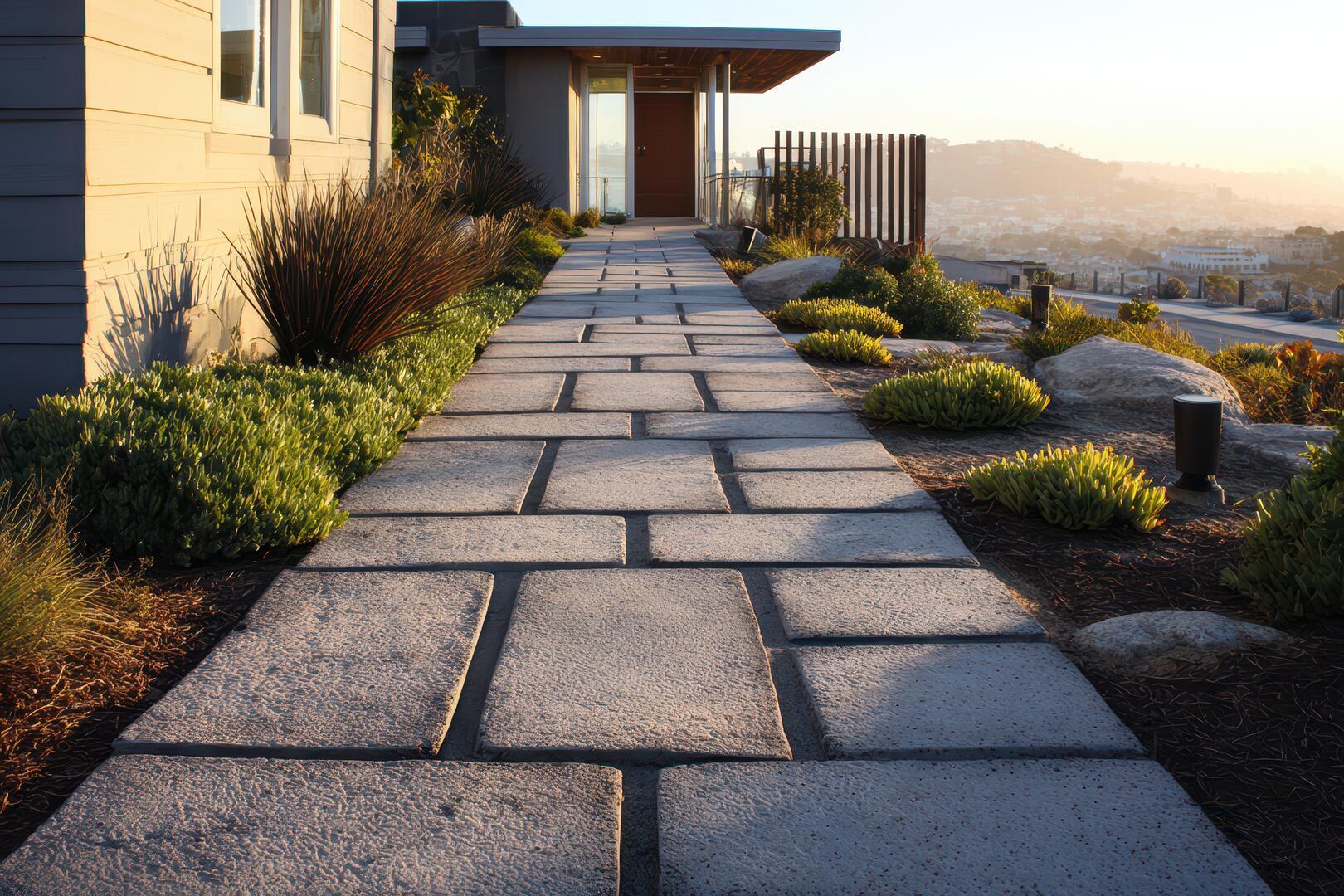
Pavers & Natural Stone in
Montgomery CountyEstate-grade hardscape across the Piney Woods transition
Montgomery County stretches from the dense Piney Woods east of I-45 through the Spring Creek corridor and into the transitional prairie north of Magnolia. It's the most geographically varied market we work in — a paver project in a Conroe lakefront estate is engineered completely differently from one on a Magnolia-area acreage property. Our work here covers that whole range, from wraparound estate patios in wooded Conroe to long driveway and courtyard installations on rural Magnolia acreage.
What makes Montgomery County hardscape different
Montgomery County has three distinct sub-markets that each require their own hardscape engineering approach. The Piney Woods eastern half around Conroe and the Woodlands edge deals with heavy tree canopy, expansive clay, and HOA/POA governance on most lots. The central corridor around Spring Creek and Imperial Oaks has a mix of newer master-planned and estate acreage. The western portion around Magnolia transitions into prairie with larger rural lots, less canopy, and more drainage across natural grade.
The other factor unique to Montgomery County is septic-system coexistence. A significant number of properties we work on have private septic fields that dictate where hardscape can and can't be placed. An experienced contractor will map the septic layout before designing the hardscape; an inexperienced one will install a 1,200 sq ft patio over a drain field and destroy both the patio and the septic in the same project. We flag septic locations on every Montgomery County site survey.
Our Montgomery County hardscape approach
Every project here starts with a site-specific engineering survey — the range of conditions across the county is too wide for a generic spec.
Site-specific engineering
Each project begins with mapping soil type, septic field location, tree canopy, grade transitions, and drainage outlets before any design work begins.
Septic-field clearance
We locate private septic fields and design hardscape to respect required clearances — failures here are among the most expensive mistakes a homeowner can make.
Material range matched to sub-market
Travertine and flagstone for wooded Conroe estates; large-format modular pavers for Magnolia acreage; porcelain for newer master-planned communities.
County permit compliance
Montgomery County has its own driveway and drainage permit requirements for unincorporated land — we pull permits as part of every project that requires them.
Acreage-scale drainage
Larger lots require full lot-drainage master plans rather than piece-specific drainage — we design the whole water flow path, not just the patio drain.
Multi-phase project management
Many Montgomery County estates are built in phases over multiple years — we design each phase to tie cleanly into future work without rework.
Areas we serve in Montgomery County
Our Montgomery County work spans Conroe to Magnolia along the FM 1488, Spring Creek, and north I-45 corridors.
Conroe / April Sound
Lakefront estate work with significant outdoor-living footprints.
Woodforest
Master-planned, HOA-controlled; modern paver palettes dominate.
Magnolia / FM 1488 corridor
Large acreage; long driveways and estate courtyard installations.
Imperial Oaks
Transitional market; mix of retrofit and new-construction hardscape.
Spring Creek corridor
Wooded lots adjacent to The Woodlands; similar ARC-informed engineering.
Grand Central Park (Conroe)
Newer master-planned community with modern paver specs.
Lake Conroe communities
Waterfront and lake-adjacent properties with specialized drainage requirements.
Porter / New Caney edges
Larger rural lots with long driveway and approach engineering.
A recent Montgomery County project
A Magnolia-area property on 3 acres wanted a 1,800 sq ft limestone flagstone courtyard between the main house and a detached guest cottage, with an integrated fire pit and bar seating. The site had a septic drain field running beneath the proposed courtyard area that the previous design had ignored.
We relocated the courtyard 18 feet to the east, designed it around two mature live oaks the original plan had to remove, and routed a drainage swale through the new alignment that tied into the existing lot drainage. The project came in on-schedule and on-budget — and the septic system is still where it's supposed to be, unharmed.
What Montgomery County hardscape projects cost
Project budgets in Montgomery County span a wide range because of the market diversity — a small patio in a master-planned community like Woodforest is a different project than a large estate program in Conroe or Magnolia with long driveway, wraparound patio, retaining walls, and outdoor kitchen. The biggest cost driver is square footage; the second is whether the project includes significant site engineering (retaining, drainage master plan, tree work, septic coordination). Projects start at $2,500. Free on-site estimates always include a detailed written scope.
Montgomery County
Footprint.
We install pavers & natural stone projects across Montgomery County and the surrounding North Houston corridor. Schedule a free on-site consultation by calling (713) 447-3398 or requesting a quote online.
Pavers & Natural Stone in Montgomery County
Questions Answered.
Do you work in unincorporated Montgomery County?
Yes — the majority of our Montgomery County work is on unincorporated acreage outside city limits. Unincorporated projects have different regulatory considerations than projects inside Conroe, Magnolia, or other incorporated cities: driveway connections to county ROW require Montgomery County Precinct permits, septic-system clearances are enforced at the county level, and flood-plain work has its own approvals. We handle all the permit coordination as part of every project.
How does septic-system location affect where I can install a paver patio?
Septic drain fields require surface permeability and unimpeded access for maintenance — which means you generally can't install a paver patio, driveway, or any impermeable surface directly over a drain field. Montgomery County enforces 10-foot minimum clearance from drain-field lines for most impermeable installations. The first step on every project where private septic exists is to locate the tank and drain field and design the hardscape around those constraints. Ignoring the septic is one of the most expensive mistakes a homeowner can make.
What material works best for a Conroe or Lake Conroe paver patio?
For wooded Conroe lots near Lake Conroe, we typically specify travertine or Oklahoma flagstone — the warm tones complement the mature pine and oak canopy, and both materials handle the lake-adjacent humidity well. For lakefront pool decks, porcelain pavers are the strongest choice because of temperature stability and chlorine/salt resistance. We avoid high-contrast modern concrete products in most Conroe wooded installations because they read visually disconnected from the surrounding landscape.
Can you work on properties in Woodforest, Imperial Oaks, or other Montgomery County HOAs?
Yes — most of our Montgomery County master-planned community work is in HOA-governed neighborhoods including Woodforest, Imperial Oaks, Grand Central Park, and the Spring Creek corridor communities. Each has its own ARC/HOA review requirements that we prepare submission packages for. The documentation requirements vary — some communities want material samples, others want full CAD site plans — and we tailor the submission to each community.
How do you handle long estate driveway replacements in Magnolia or north Conroe?
Long driveway replacement — 500 to 1,500 feet — is one of our most common Montgomery County project types. The process includes removal of the existing surface, subgrade correction and compaction, installation of culverts at natural drainage points, and the finished surface (typically exposed aggregate, large-format pavers, or high-quality stabilized decomposed granite on longer rural runs). Projects typically take 4–10 weeks depending on length and drainage complexity, with weather being the most common schedule variable.
Pavers & Natural Stone in Nearby Areas
More From Us in Montgomery County
All Pavers & Natural Stone Services
See how we design, engineer, and install pavers & natural stone projects across all six of our North Houston service areas.
View Hub ExploreAll Services in Montgomery County
Full landscape service menu for Montgomery County — drainage, hardscape, irrigation, outdoor living, and more.
View Montgomery County