
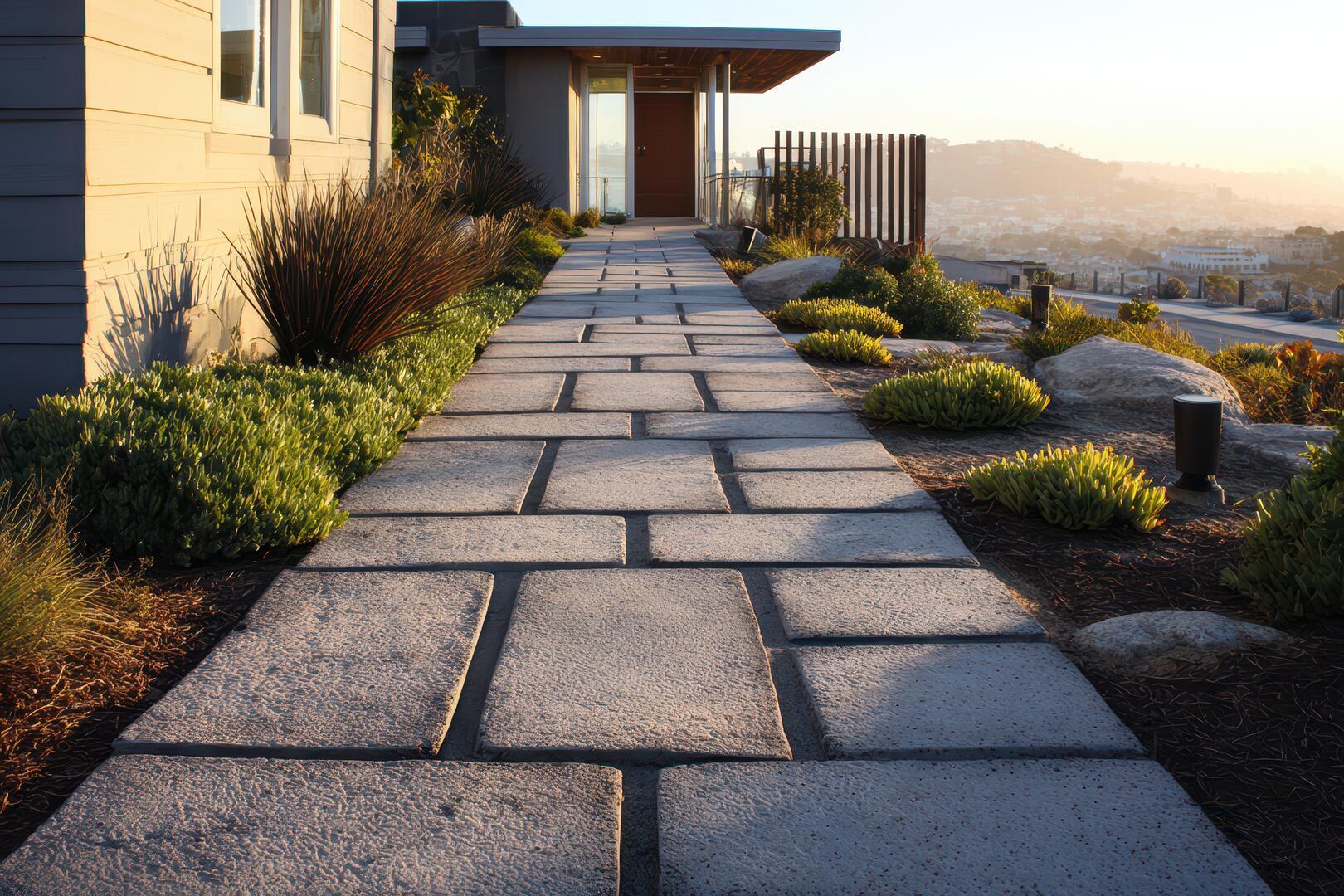
Pavers & Natural Stone in
Spring, TXEngineered hardscape for Katy Prairie clay lots
Spring sits on some of the most expansive clay soil in the Greater Houston area. That single fact dictates almost every engineering decision on a paver project here — from sub-base depth to edge restraint choice to drainage integration. Most of the cracked, heaved, or sinking paver work we're called to replace in neighborhoods like Gleannloch Farms and Windrose is failing because the original installer ignored what Spring's soil does when it gets wet and then dries out.
What Spring soil does to paver installations
Beaumont and Katy Prairie clays can expand 6%+ of their volume between saturated and bone-dry states. That's tens of thousands of pounds of force pushing up on anything rigid that sits on top of the soil — which is why poured concrete driveways in Spring crack within a decade and why paver patios installed on shallow, under-compacted sub-bases heave or settle within 2–3 seasons.
Done right, the paver system itself is the solution. A deep, well-drained crushed-concrete base plus the flexible joint of polymeric-sand-sealed pavers actually absorbs soil movement that would destroy a rigid slab. But the engineering has to be right: minimum 8-inch compacted sub-base on patios, 10–12 inches on driveways, with proper fall to an outlet so water never sits against the base course. We've replaced dozens of failed installations in Northampton, Cypresswood, and Gleannloch Farms that were missing one or more of those elements.
Our Spring paver installation approach
Every Spring project is engineered for the soil conditions it will actually live on — not a generic spec.
Soil-matched sub-base depth
Minimum 8" compacted crushed-concrete under patios; 10–12" under driveways; geotextile separation on every project.
Laser-graded fall
2% minimum fall across the surface, engineered to an approved outlet — never ponding against a foundation or retaining wall.
Concrete edge restraint
We pour a concealed concrete toe around the perimeter rather than using plastic or steel edge strips, which creep in expansive clay.
Integrated drainage capture
French drain or catch basin ties into every project larger than 300 sq ft; the driveway or patio becomes part of the lot's drainage plan, not an obstacle to it.
Clay-proven material specs
Modular concrete pavers and porcelain lead the spec list in Spring — both flex with the joints and hold up to the region's humidity without efflorescence.
HOA submissions included
We prepare submission packages for Gleannloch Farms, Windrose, Northampton, and Cypresswood HOAs — we've cleared all of them before.
Neighborhoods we serve in Spring, TX
Most of our Spring work concentrates in the master-planned communities along the 2920 and Louetta corridors, but we serve the broader 77379 / 77388 / 77389 area.
Gleannloch Farms
HOA-controlled; we've cleared dozens of submissions for paver work here.
Windrose
Mature community with persistent drainage issues — almost every paver project integrates drainage.
Northampton
Older builds with failing original hardscape; common full-replacement market for us.
Cypresswood
Well-established HOA standards; modular paver palettes clear review quickly.
Augusta Pines
Larger lots supporting full outdoor-living programs with pool decking.
Auburn Lakes
Newer construction with better original grading but still requires engineered sub-base depth.
Creekside Estates
French-drain tie-ins are standard on most patios we install here.
A recent Spring project
A Gleannloch Farms homeowner had a 500 sq ft concrete paver patio installed by a low-bid contractor that heaved noticeably within 18 months — two pavers had lifted nearly an inch and the polymeric sand had failed across most joints. Root cause: the original sub-base was less than 3 inches of stone dust over raw clay, with no fall and no drainage.
We removed the failed work, excavated to 10 inches below grade, installed geotextile, a compacted crushed-concrete base, and laser-graded 2% fall to a new French drain tied to the side-yard easement. The re-installed patio has been flat and dry through three seasons.
What paver projects cost in Spring
Spring paver pricing depends on lot size, scope of work, material selection, and whether an existing failed installation has to be removed first. Projects start at $2,500 and every quote is provided in writing after a free on-site assessment — we won't price a Spring project from a drawing because lot access, soil, and drainage conditions vary too much from property to property.
Spring
Footprint.
We install pavers & natural stone projects across Spring and the surrounding North Houston corridor. Schedule a free on-site consultation by calling (713) 447-3398 or requesting a quote online.
Pavers & Natural Stone in Spring
Questions Answered.
Why do so many paver patios fail in Spring, TX?
The single biggest cause of paver failure in Spring is an under-built sub-base. Spring sits on highly expansive clay soil (Beaumont / Katy Prairie series) that moves dramatically between wet and dry states. If the installer skimps on base depth or skips proper compaction and geotextile separation, the clay will move — and the pavers move with it. A properly engineered installation with an 8–12 inch compacted crushed-concrete base, laser-graded fall, and concrete edge restraint will handle Spring's soil movement for decades.
Does my Spring HOA allow paver driveways and patios?
Virtually all of the master-planned communities in Spring — Gleannloch Farms, Windrose, Northampton, Cypresswood, Augusta Pines — allow paver installations, but every one has submission requirements around material, pattern, and color. We've cleared submissions in all of these communities and include ARC documentation as part of every project, so the approval process doesn't fall on you.
Can pavers be installed over an existing concrete driveway in Spring?
Sometimes, but rarely a good idea. Overlay installations can work if the existing concrete is structurally sound, has proper fall, and has adequate clearance under garage doors and adjacent surfaces. In Spring, most existing concrete driveways we inspect are already cracked from soil movement, and an overlay just transfers that movement to the new pavers. Nine times out of ten, we recommend removal and a proper new installation — it costs modestly more now and lasts decades longer.
How do pavers handle Spring's drainage problems?
Pavers are actually the best hardscape option for Spring's drainage conditions when designed correctly. The permeable joints of a properly installed paver surface absorb significantly more water than poured concrete, and the system can be engineered with integrated drains that tie into the broader lot plan. We routinely design paver driveways and patios that double as drainage-capture features — a visible improvement to both the flooding issue and the property's aesthetic.
How long does a Spring paver installation take?
A standard 400–600 sq ft patio in Spring typically takes 5–10 working days from excavation to final polymeric sand. Driveways run 7–14 days. Weather is the biggest variable — if the sub-base gets saturated mid-installation, we hold until it dries back out before compacting, because compacting wet clay into the base is one of the failure modes that leads to long-term settling.
Pavers & Natural Stone in Nearby Areas
More From Us in Spring
All Pavers & Natural Stone Services
See how we design, engineer, and install pavers & natural stone projects across all six of our North Houston service areas.
View Hub ExploreAll Services in Spring
Full landscape service menu for Spring — drainage, hardscape, irrigation, outdoor living, and more.
View Spring